
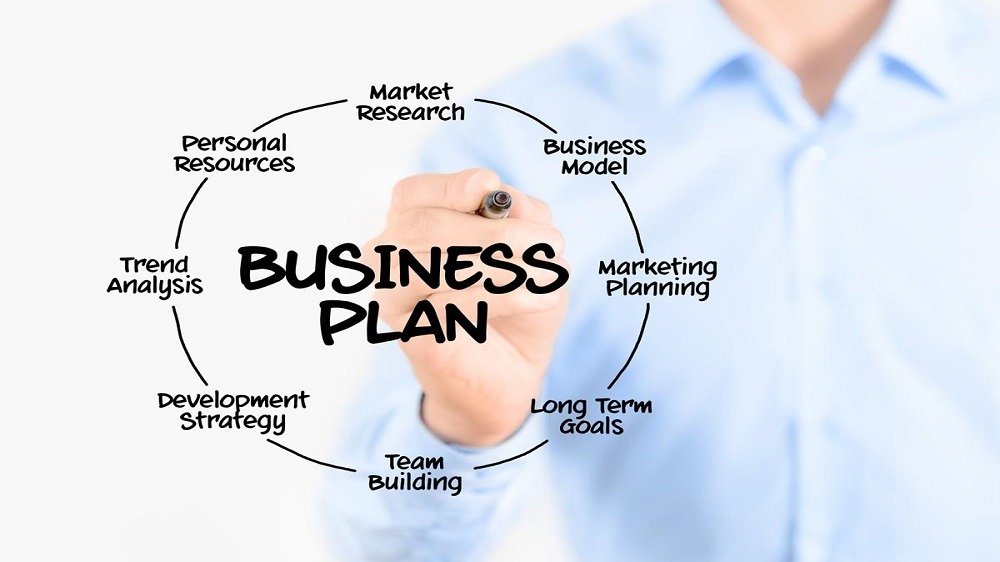
Business development has become one of the key drivers of growth, by discovering markets and opportunities, building partnerships, developing relationships, and creating new sources of value. This role is increasingly important in Saudi Arabia with the growth of the private sector, small and medium-sized enterprises and the expansion of new sectors and opportunities.
According to the Saudi Vision 2030 report for 2025, the number of small and medium enterprises in the Kingdom exceeded 1.7 million establishments, and the number of employees reached about 8.8 million people, while their contribution to the GDP reached 22.9%.
But growth doesn’t happen by chance. It needs a clear strategy that defines where opportunities exist, which ones are worth investing, and how they can be transformed into measurable results.
The concept of business development strategy?
A business development strategy is a practical framework that defines the way a company will use to discover, evaluate, develop, and transform growth opportunities into sustainable value. They typically include identifying target markets, analysing customers and competitors, building partnerships, identifying growth channels, developing value supply, and identifying performance indicators.
1- Start understanding the situation of your company and the market
The first step in any successful strategy is to know where to stand now.
Before looking for new opportunities, you should analyse:
- The company’s current performance.
- Products and services.
- Strengths and weaknesses.
- Existing customers.
- The markets in which the company operates.
- Competitors.
- Sector trends.
- Future opportunities and threats.
The strategic question is: where are the growth opportunities most favourable to the company’s capabilities?
2- Set clear goals for business development
Goals must be clear, measurable and linked to the company’s priorities.
For example, the goal could be: to enter the logistics sector in the Kingdom within 12 months and get 10 new institutional customers. Or build three strategic partnerships over the next year to open new distribution channels.
The objectives of business development may be related to:
- Entering a new market.
- Increase revenue.
- Obtaining institutional clients.
- Develop strategic partnerships.
- Increase market share.
- Launching a new product or service.
- Enter a new supply chain.
- Geographical expansion.
3- Identify markets and priority customers
It is a common mistake in business development to try to target everyone, while an effective strategy is based on a clear definition of the target market
- The sector.
- The size of the company.
- The geographical location.
- Customer needs.
- Purchasing power.
- The size of the opportunity.
- The level of competition.
4- Clearly define the display of value
Why would the customer choose your company? This is where Value Proposition comes in.
A good value presentation demonstrates the problem that the company solves and the value that the customer receives.
Instead: We provide integrated solutions for companies. The message could be more specific: for example, he says: we help medium-sized companies raise their readiness to deal with large companies through process development, compliance and supplier rehabilitation.
The clearer the value presentation, the easier it is for a business development professional to identify the right customers and build the right business messages for them.
5. Identify channels for growth and opportunity generation
The company needs to determine how it will reach these opportunities.
Channels can include:
- Relationships and professional networks.
- Strategic partnerships.
- Events and exhibitions.
- Tenders and competitions.
- Referrals.
- Content marketing.
- LinkedIn and digital platforms
6- The son of a strategy for partnerships
Partnerships have become an important component of modern growth strategies.
A company may have a good product, but it does not have:
- Access to the market.
- Client network.
- The required technique.
- Operational capabilities.
- Local knowledge.
7- Use data and technology in decision-making
Modern business development is becoming more data-based. Instead of relying solely on relationships and impressions, the specialist can use the data to:
- Market analysis.
- Identify the fastest growing sectors.
- Studying competitors.
- Analyse customer behaviour.
- Assessing opportunities.
- Ranking potential customers.
8- Set clear performance indicators
Business development strategy cannot be managed without a measure.
Indicators that can be used include:
- The number of new opportunities.
- The value of the Pipeline.
- Opportunity conversion rate.
- The number of new customers.
- The value of new contracts.
- The number of partnerships.
- Revenues from partnerships.
- The cost of acquiring the customer.
The conclusion
In the end, the success of a business development strategy depends on the ability to select the right opportunities and turn them into concrete results. With the acceleration of transformations in the Saudi market, the business development specialist needs to combine strategic vision, market understanding, relationship building, and the ability to execute. Every carefully considered opportunity today may be the beginning of a new partnership, a new market, or a new phase of business growth.
